When a cat suddenly stops using the litter box, it is easy to assume they are being difficult, upset, or making some kind of statement.
Cats usually have a much more practical reason.
Something about the litter box, the litter itself, its location, the surrounding environment, or the experience of using it may no longer feel right. Because cats can be particular about where they eliminate, even a change that seems minor to us can be enough to make another spot in the house more appealing.
The good news is that many litter box problems can be approached by going back to the basics and looking at the setup from your cat’s perspective.
At The Healthy Pet House in Maplewood, we help St. Louis-area cat parents work through everyday concerns like litter preferences, household stress, enrichment, and changing routines. If your cat has started avoiding the box, here are some of the first things worth checking.
Start With the Size of the Litter Box
One of the simplest problems is also one of the easiest to overlook: the box may simply be too small.
Your cat needs enough room to enter comfortably, turn around, dig, position themselves, and cover their waste without feeling cramped. A box that seemed spacious when your cat was younger may no longer work as well once they reach full size.
Large cats can be particularly challenging because many standard litter boxes are designed more around fitting neatly into a home than around giving the cat generous room to move.
If your cat frequently perches on the edge, eliminates right beside the box, or seems reluctant to fully step inside, size is worth reconsidering.
The entrance matters too. Kittens, senior cats, and cats with limited mobility may have difficulty climbing into boxes with high sides. A lower entry can make the litter box much easier to access without sacrificing the larger footprint your cat needs.
Covered or Uncovered? Let Your Cat Decide
Covered litter boxes appeal to people because they can help contain scattered litter and hide what is happening inside.
Your cat may have a different opinion.
Many cats prefer an open box because it provides more room, better airflow, and a clear view of the surrounding area. A hood can trap odors inside the box and may also make some cats feel confined, particularly in homes with other pets.
That does not mean every covered box is a bad choice. Some cats use them without hesitation. The important thing is paying attention to what your individual cat prefers.
If your cat has started avoiding a covered box, removing the lid is an easy experiment. Give them time to decide whether the more open setup feels better.
The Litter Itself Matters
Cats experience litter through both their paws and their highly sensitive sense of smell, so texture and fragrance can influence whether they want to use it.
Many cats prefer a finer-textured, unscented litter. Strong perfumes that smell fresh to us may be overwhelming to a cat standing just inches away from the litter.
Changing litter suddenly can also create problems for a cat that was perfectly happy with the previous texture or scent.
If you want to try something different, consider making the transition gradually by mixing increasing amounts of the new litter into the familiar one. Another option is to place two boxes beside each other with different litter types and allow your cat to show you which one they prefer.
The amount of litter matters too. More is not necessarily better. A relatively shallow layer gives most cats enough material to dig and cover without forcing them to step through a deep, unstable surface.
If you are overwhelmed by all the litter options available, stop in and talk with The Healthy Pet House team. We can help you compare textures, materials, and other practical differences based on what your cat currently uses and how they interact with the box.
Location Can Make or Break the Setup
A litter box may be perfectly clean, spacious, and filled with the right litter but still be ignored because it is sitting in the wrong place.
Cats generally want a location that provides some privacy without making them feel trapped.
A box beside a noisy washing machine, in the middle of heavy household traffic, or tucked into a corner with only one way out may feel uncomfortable. This can become especially important in a home with dogs, children, or multiple cats.
Ideally, the litter box should be:
- Easy to reach at all times
- Away from food and water
- In a relatively quiet area
- Somewhere your cat can enter and leave comfortably
- Away from appliances or sudden noises
- Accessible without requiring difficult stairs or jumps
Basements are convenient for people, but they may not be convenient for every cat. If your cat spends most of the day two floors away from the only litter box, adding another box closer to their normal living space can make a significant difference.
One Cat Does Not Always Mean One Box
A widely used guideline is to provide one litter box per cat, plus one additional box.
That means two cats would ideally have access to three boxes.
The goal is not simply to increase capacity. Multiple boxes give cats choices and reduce the possibility that one cat can control another cat’s access to an important resource.
Placement matters here as well. Three boxes lined up beside each other may function more like one large litter area from the cats’ perspective. Spreading boxes throughout different parts of the home gives each cat more options.
This is especially useful in multi-cat households where relationships are not always as peaceful as they appear. One cat does not need to physically attack another to make the litter box uncomfortable. Staring, blocking a hallway, waiting outside the box, or quietly controlling access to a room may be enough to influence where another cat chooses to go.
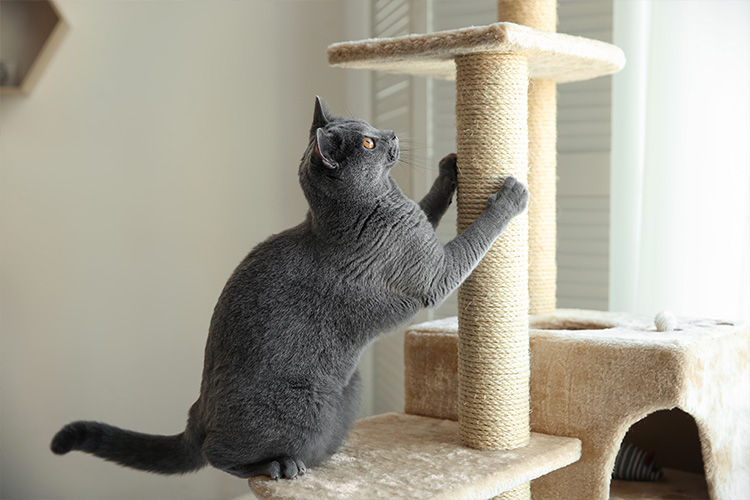
Providing several litter boxes, resting areas, water sources, scratching surfaces, and other resources can reduce that competition. If you are also evaluating the scratching options around your home, our article Choosing the Right Scratching Surface for Your Cat walks through how placement, texture, orientation, and stability influence whether cats actually use what you provide.
Cleanliness Counts
Cats are famously particular about cleanliness, and their bathroom preferences are no exception.
Scoop waste at least once each day and more often when several cats share the same boxes. Periodically empty the box completely and clean it using a mild, unscented cleaner before adding fresh litter.
Strongly scented cleaners can create another problem because the box may smell clean to you while smelling unfamiliar or unpleasant to your cat.
Pay attention to the condition of the box itself too. Plastic can become scratched over time, allowing odors to linger even after cleaning. A heavily worn box may eventually need to be replaced.
The goal is not to make the litter box smell like perfume. It is to keep it consistently clean, dry, and comfortable enough that your cat continues choosing it.
Think About What Changed
If your cat reliably used the litter box for years and suddenly changes behavior, look at what has changed around them.
Sometimes the answer is obvious, such as switching litter brands or moving the box. Other changes can be easier to overlook.
Consider whether you have recently:
- Moved furniture
- Relocated the litter box
- Changed litter
- Added another pet
- Had houseguests
- Changed work schedules
- Renovated part of the home
- Introduced unfamiliar noises
- Changed your cat’s usual routine
Cats notice changes in their environment, even when those changes seem insignificant to us.
This is something we also discuss in Cats in Spring: Why Indoor Cats Feel Seasonal Changes Too. Indoor cats are constantly responding to changes in light, household activity, sounds, smells, and routines, even though they may never leave the house.
When possible, preserve familiar resources and give your cat time to adjust rather than changing multiple things at once.
Senior Cats May Need a Different Setup
The litter box that worked for your cat at five years old may not be the best choice at fifteen.
Older cats can become less flexible or may find climbing, stairs, and high-sided boxes more difficult than they once did. A lower-entry box and a convenient location can make the bathroom routine much easier.
Adding boxes can help too, especially in larger or multi-level homes. The less distance an older cat has to travel when they need to eliminate, the easier it is for them to maintain familiar habits.
Pay attention to subtle changes such as hesitation before entering the box, balancing on the edge, or choosing an area immediately beside it. Sometimes the cat still understands exactly where they should go, but accessing the box has become more challenging.
Do Not Punish Litter Box Accidents
Finding urine on the carpet or laundry is frustrating, but punishment does not solve the reason your cat avoided the box.
Cats do not generally eliminate outside the litter box to get revenge or teach their humans a lesson. Yelling, spraying water, or carrying a cat back to the box can create additional stress without making the box itself any more appealing.
Instead, clean the accident thoroughly with a pet-safe enzymatic cleaner that helps remove lingering odor, then work through the setup systematically.
Ask yourself whether the box is large enough, clean enough, easy to access, located somewhere comfortable, and filled with a litter your cat likes.
Troubleshooting the reason is far more useful than responding to the accident itself.
Give Your Cat Positive Outlets Elsewhere
Litter box behavior does not exist completely separately from the rest of a cat’s environment.
Cats also need opportunities to scratch, climb, hide, observe, hunt, play, and rest. When the home provides appropriate outlets for these natural behaviors, the overall environment becomes more comfortable and predictable.
Consider incorporating:
- Scratching posts and pads
- Cat trees or climbing areas
- Window perches
- Wand-toy sessions
- Puzzle feeders
- Catnip or silvervine toys
- Comfortable resting areas
- Quiet spaces away from household activity
You do not need to transform the house into a feline amusement park overnight. A few thoughtfully placed resources can make a meaningful difference, particularly when they allow cats in multi-pet homes to spread out and make choices.
Know the Signs That Should Be Treated as Urgent
Most litter box challenges are worth approaching by looking carefully at the setup, routine, and environment first. There is one important distinction, however.
If a cat repeatedly enters the litter box and strains but produces little or no urine, cries while attempting to urinate, appears increasingly distressed, or seems unable to urinate, treat the situation as urgent. Urinary obstruction can become life-threatening, particularly in male cats.
Outside of urgent signs, stop in and talk with The Healthy Pet House team about what you are seeing. We can help you work through litter types, box styles, location, household setup, enrichment, and other everyday factors that may be influencing your cat’s behavior.
A Simple Litter Box Reset
When you are not sure where to begin, resist the temptation to change everything at the same time.
Start with the basics:
- Make sure the box is large enough.
- Keep it consistently clean.
- Try an unscented, comfortable litter.
- Keep the litter relatively shallow.
- Place the box somewhere quiet and easy to access.
- Remove the cover if your cat seems hesitant.
- Add additional boxes when needed.
- Clean accidents thoroughly.
- Give changes time before making another adjustment.
Watching how your cat responds to one or two thoughtful changes can tell you much more than replacing the box, litter, location, and cleaning routine all at once.
Litter Box FAQs
How many litter boxes should I have?
A useful guideline is one box for each cat, plus one additional box. Rather than placing every box together, distribute them throughout the home so cats have meaningful choices about where to go.
Do cats prefer covered or uncovered litter boxes?
Many cats prefer uncovered boxes because they provide more space, airflow, visibility, and escape options. Individual preferences vary, so if your cat is avoiding a covered box, removing the lid is an easy change to try.
What type of litter do most cats prefer?
Many cats prefer an unscented litter with a relatively fine texture. However, cats can develop strong individual preferences, particularly if they have used one type of litter for years.
How deep should cat litter be?
More litter is not always better. Many cats are comfortable with roughly one to two inches, which gives them material to dig and cover while maintaining a stable surface under their feet.
Where should I put the litter box?
Choose a quiet, accessible area away from food and water where your cat does not feel trapped. Avoid placing the only box beside loud appliances or somewhere your cat must travel a long distance to reach.
Why is my cat going right next to the litter box?
That can be an important clue. The cat may understand where the bathroom area is but dislike something about entering or using the box itself. Look at box size, entry height, cleanliness, litter texture, covers, and accessibility.
Should I switch litter if my cat stops using the box?
You can certainly evaluate the litter, but avoid making a sudden switch unless necessary. Offering a second box with a different litter can allow your cat to demonstrate a preference without taking away the familiar option.
Is a litter box problem ever urgent?
Difficulty urinating is different from an ordinary litter preference issue. Repeated trips to the box, straining with little or no urine produced, crying during attempts, or obvious distress should be treated as urgent.
Start With Your Cat's Point of View
When a cat stops using the litter box, the most useful question usually is not, "Why is my cat doing this to me?"
Instead, ask, "What about this setup is no longer working for my cat?"
The answer may be a box that is too small, litter they dislike, a location that feels unsafe, competition with another cat, a cleanliness issue, or a household routine that recently changed. Often, the solution begins with observing the environment and making one thoughtful adjustment at a time.
At The Healthy Pet House in Maplewood, we are happy to help you think through your cat's litter box setup, preferences, and everyday environment. Stop in and talk with our team about what you are seeing, and we can help you explore practical options that make sense for your cat and your home.
Because pets are family too.